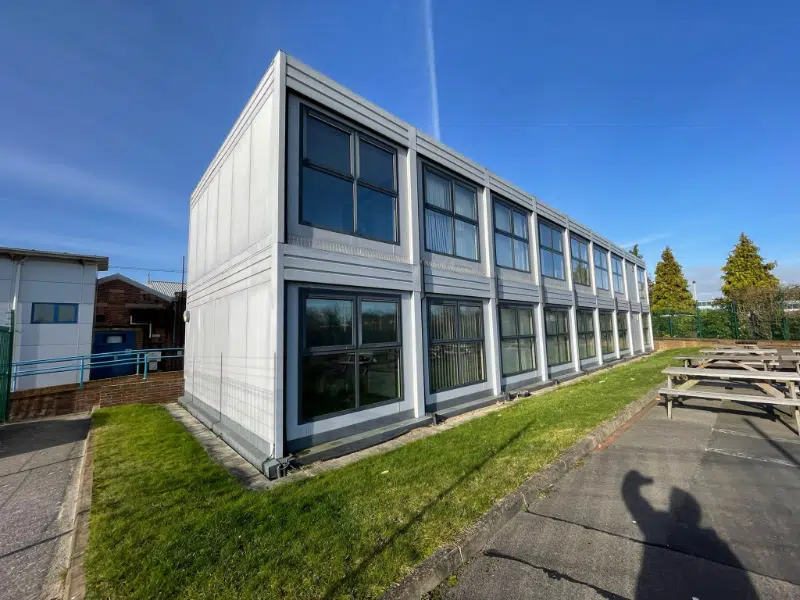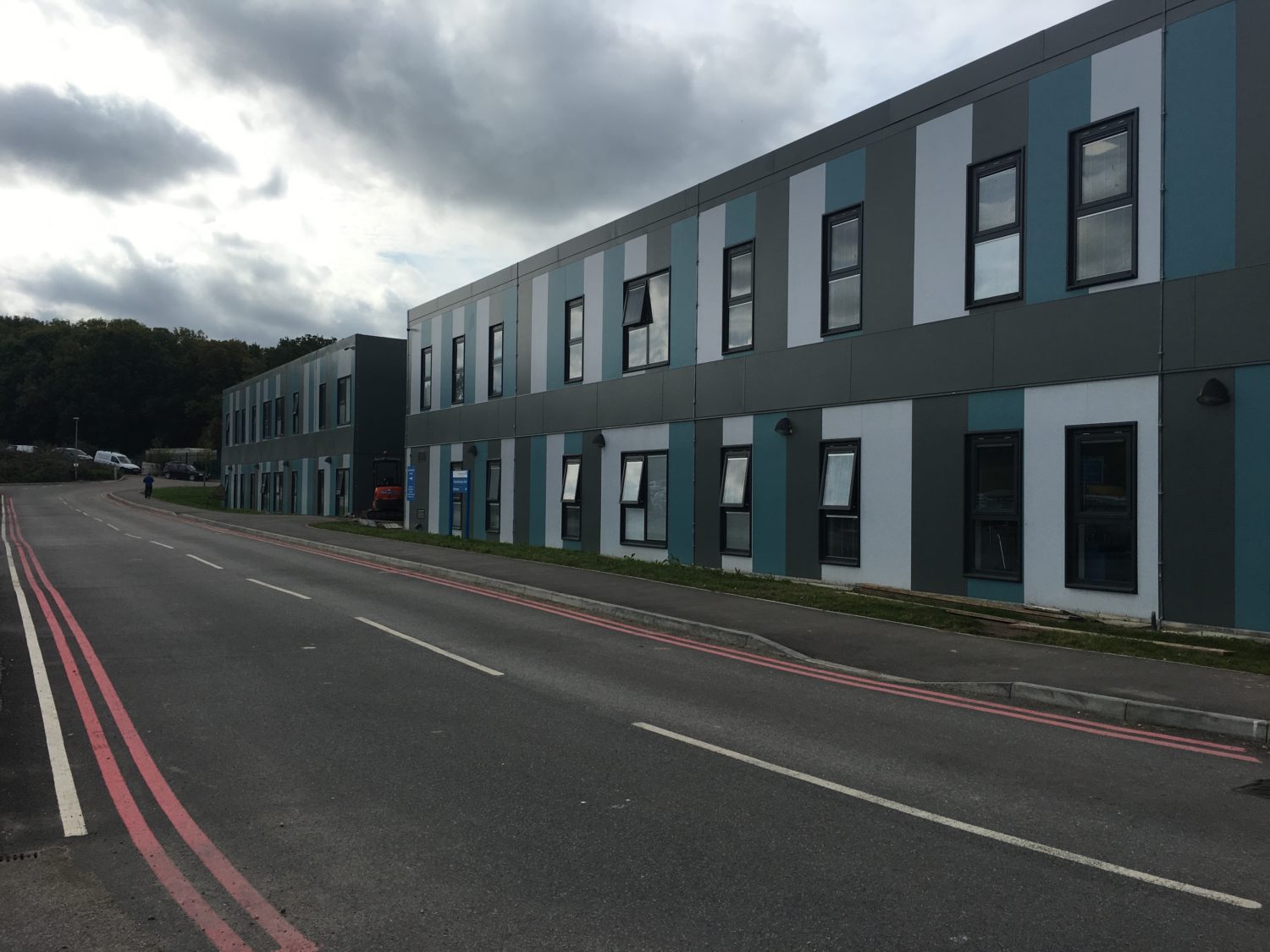
Healthcare providers across the UK are facing increasing pressure to expand services, improve patient flow and create additional clinical space without disrupting day-to-day operations.
NHS Trusts, hospitals, community healthcare providers and private medical organisations often need new facilities delivered within tight timescales while maintaining high standards of care.
This is where modular healthcare buildings have become an increasingly important part of modern healthcare construction.
Using off-site manufacturing methods, modular healthcare facilities can provide high-quality clinical environments for a wide range of healthcare applications. From hospital wards and diagnostic centres to clinics and specialist treatment spaces, modular construction allows healthcare providers to increase capacity while minimising disruption to patients and staff.
In this guide, we’ll explore the different types of modular healthcare buildings available, the benefits they offer and why they continue to play an important role in supporting NHS and healthcare estates across the UK.
What Are Modular Healthcare Buildings?
Modular healthcare buildings are healthcare facilities manufactured off site before being delivered and assembled at their final location.
Rather than constructing the entire building within a live healthcare environment, individual building sections are produced in a controlled factory setting and then transported to site for installation.
This approach allows healthcare providers to create new clinical space more efficiently while reducing the amount of construction activity taking place around patients, staff and existing healthcare operations.
Modern healthcare buildings can be designed for both temporary and permanent use and may include:
Today’s modular healthcare buildings are designed to provide the same standards of comfort, functionality and performance expected from traditional healthcare facilities while offering greater flexibility during delivery and future expansion.
Why The NHS & Healthcare Sector Use Modular Construction
Healthcare organisations often face challenges that make traditional construction difficult.
Growing patient numbers, ageing estates, increasing demand for diagnostic services and pressure on available clinical space all require practical solutions that can be delivered quickly.
Modular construction helps healthcare providers respond to these challenges by creating additional space without the lengthy construction programmes often associated with conventional building methods.
For NHS Trusts, this can mean expanding hospital capacity, creating specialist treatment areas or delivering new diagnostic facilities while continuing to provide essential healthcare services.
Private healthcare providers can also benefit from modular construction when expanding existing facilities or opening new treatment centres.
The ability to manufacture much of the building away from site helps reduce disruption while supporting faster project delivery.
This is one of the reasons why modular NHS buildings have become increasingly common throughout the UK healthcare sector.
Types Of Modular Healthcare Buildings
One of the strengths of modular healthcare construction is its versatility.
Healthcare providers can use modular buildings for a wide variety of clinical, diagnostic and support functions.
Modular Hospital Wards
Additional ward capacity remains one of the most common uses for modular construction within the healthcare sector.
Modular hospital wards can help healthcare providers respond to increasing patient demand, seasonal pressures or estate redevelopment projects.
These facilities can be designed around patient care requirements while supporting healthcare staff with practical, efficient working environments.
Modular wards are often used to:
- Increase bed capacity
- Support refurbishment projects
- Create specialist treatment areas
- Expand existing hospital facilities
Modular Clinics
Clinics provide an effective way to deliver healthcare services closer to patients while reducing pressure on larger hospitals.
Modular clinics can support:
- Outpatient services
- Community healthcare provision
- Specialist treatment programmes
- Consultation facilities
- Primary care services
As part of wider modular medical buildings, clinics can be developed for both temporary and permanent healthcare requirements.
MRI & Diagnostic Buildings
Demand for diagnostic services continues to grow across the NHS and private healthcare sectors.
Dedicated modular MRI buildings and diagnostic facilities can provide specialist environments for imaging and diagnostic services while helping healthcare providers increase capacity.
These facilities can accommodate:
- MRI scanners
- CT scanning facilities
- Diagnostic imaging equipment
- Patient preparation areas
- Clinical support spaces
Diagnostic services often face significant demand, so modular construction can help healthcare providers bring additional capacity online more quickly.
Modular Laboratories
Healthcare laboratories play a critical role in diagnostics, research and patient care.
Modular labs can provide controlled environments designed around specific operational requirements.
These spaces may support:
- Clinical testing
- Research activities
- Sample processing
- Healthcare diagnostics
Layouts can be developed around the equipment, workflow and technical requirements of each facility.
Modular Discharge Lounges & Temporary Healthcare Spaces
Not every healthcare project involves creating large permanent buildings.
Many healthcare providers require smaller facilities that help improve patient flow and support operational efficiency.
Examples include:
- Discharge lounges
- Temporary treatment spaces
- Assessment units
- Waiting areas
- Support facilities
These types of healthcare spaces can often be delivered quickly and adapted as operational needs change.
Benefits Of Modular Healthcare Buildings
Healthcare providers choose modular construction for a variety of practical and operational reasons.
Rapid Deployment
One of the most significant advantages of modular healthcare construction is speed.
While site preparation takes place, building modules can be manufactured at the same time within a controlled environment.
This can reduce overall project timescales and help healthcare organisations bring facilities into operation sooner.
For NHS estates teams facing immediate capacity pressures, faster delivery can be particularly valuable.
Minimal Disruption
Live healthcare environments require careful planning.
Hospitals, clinics and treatment centres cannot simply pause operations while construction work takes place.
Modular construction helps reduce the amount of activity required on site, limiting disruption to patients, visitors and healthcare professionals.
This is often one of the key reasons organisations choose modular hospital buildings over traditional construction methods.
Compliance & Safety
Healthcare buildings must meet strict requirements relating to safety, accessibility and operational performance.
Modular healthcare projects can be designed around relevant healthcare standards and project-specific requirements to support safe and effective clinical environments.
The controlled manufacturing process also allows greater consistency throughout production.
Scalability & Flexibility
Healthcare requirements can change rapidly.
Modular buildings provide greater flexibility for future adaptation, expansion or reconfiguration compared with some traditional construction approaches.
This allows healthcare providers to plan for future growth while maintaining greater control over their estates.
Sustainability
Sustainability continues to be an important consideration across the healthcare sector.
Off-site construction can help reduce material waste and improve manufacturing efficiency.
Many modern healthcare facilities are also designed with energy performance in mind, helping support long-term operational objectives.
How Modular Healthcare Buildings Support NHS Capacity
Healthcare estates teams are under constant pressure to deliver more services with limited space and resources.
Modular healthcare buildings help address this challenge by creating additional clinical capacity without requiring lengthy construction programmes.
Examples include:
- Additional ward space
- Diagnostic facilities
- Temporary treatment centres
- Community healthcare hubs
- Hospital extensions
- Specialist clinical environments
By creating new facilities quickly and efficiently, modular construction can help healthcare providers respond to changing patient demand while maintaining continuity of care.
Many NHS projects now incorporate modular construction as part of wider estate development strategies due to the flexibility and speed it offers.
Key Compliance Standards Explained
Compliance is a central consideration in any healthcare building project.
Healthcare facilities are designed around the specific requirements of their intended use and may take into account a range of standards and guidance.
These can include:
Health Building Notes (HBN)
HBN guidance helps inform the planning and design of healthcare environments, ensuring facilities support effective patient care and operational efficiency.
Health Technical Memoranda (HTM)
HTM guidance covers technical and engineering requirements across healthcare estates, including areas such as ventilation, electrical systems and specialist healthcare infrastructure.
Accessibility Requirements
Healthcare buildings must support patients, visitors and staff with a wide range of accessibility needs.
Infection Control Considerations
Design decisions often take infection prevention and control requirements into account, helping create safe healthcare environments.
Every project is different, so compliance should always be considered on a project-by-project basis.
Why Choose Cotaplan For Modular Healthcare Buildings?
Here at Cotaplan, we have been delivering modular buildings across the UK since 1982 and have extensive experience supporting healthcare organisations with both temporary and permanent building requirements.
Our team works closely with healthcare providers to understand operational requirements, site constraints and long-term objectives before developing practical building solutions.
Healthcare organisations choose Cotaplan because of our:
Modular Healthcare Buildings FAQs
What are modular healthcare buildings?
Modular healthcare buildings are healthcare facilities manufactured off site before being transported and assembled at their final location. They can be used for temporary or permanent healthcare applications.
Are modular healthcare buildings compliant with NHS standards?
Healthcare facilities can be designed around relevant NHS guidance, project requirements and healthcare standards, including HBN and HTM considerations where applicable.
How quickly can a modular healthcare building be installed?
Project timescales vary depending on building size, complexity and site requirements. Modular construction can often reduce overall delivery times compared with traditional construction methods.
Can modular hospital buildings be permanent?
Yes. Many modular hospital buildings are designed as long-term healthcare facilities and form part of wider healthcare estates.
What types of healthcare facilities can be built modularly?
Examples include hospital wards, clinics, diagnostic centres, laboratories, imaging facilities, discharge lounges and specialist treatment spaces.
Are modular healthcare buildings cost-effective?
Every project is different. Factors such as building size, specification and programme requirements will influence costs. Modular construction can provide efficiencies through faster delivery and controlled manufacturing processes.
Can modular buildings be expanded in the future?
In many cases, modular buildings can be expanded, adapted or reconfigured as healthcare requirements change.
Get In Touch With Us
Whether you’re planning additional ward capacity, a diagnostic facility, specialist treatment space or a wider healthcare estate expansion, modular construction can provide a practical and flexible solution.
We work with NHS Trusts, healthcare estates teams and private healthcare providers across the UK to deliver high-quality healthcare facilities designed around operational requirements and patient care.
To discuss your project, contact us and speak with our team about your healthcare building requirements. You can call us on 01942 271301, email us at info@cotaplan.co.uk, or fill in our online contact form.